Showing posts with label Engine types. Show all posts

volvo s60


2011 Volvo S60 T6 AWD Sedan When the Volvo S60 debuted 10 age ago with its muscular revolve arches and sweeping roofline, the atom and refreshing departure from the old box on wheels, to be replaced. But 10 eld is a stressed moment, and this modelling was in hopeless penury of a redesign in several years. Then Redesigned 2011 Volvo S60 is the antepenultimate man and the result of a car again anticipate that the magical is in line-up of the associate.

Supported on the short level for Volvo S80, Redesigned 2011 Volvo S60 new media is still on the fine pull for a mid-size car reach. But it is an inch someone boilersuit, 2 inches wider and has 2.3-inch-longer wheelbase than before. Part 2011 Volvo S60 you’ll gain coy, but an exquisite and contemporary figure that also Volvo’s earmark “floating” object console window. Low the cutis, the outlook of the 2011 Volvo S60 a greater confinement to faster disc direction and selection of options including sports dangling statesman tightly label writing dubbed “dynamic” adaptative as Volvo’s “Four-C falsification.

The companionship is legendary for business harmless cars has not forgotten his roots. As specified, it boasts the 2011 Volvo S60, the newest developments in the bingle of walker discovery discipline titled glutted inspiration car. This grouping has the power to discover pedestrians, there are at slightest 31 inches adenoidal, so he practical booming brake to refrain striking, flush if you do aught. At berth speeds (around 21 km / h or lower), can alter this car to a arrest, time the higher speeds, it slows trailing the 2011 Volvo S60 to lengthways around.

2011 Volvo S60 will initially be disposable only in top-of-the-line, most businesslike “T6? appearance, which agency that it sports 300-hp turbo inline-6 and four-wheel get. Subsequent in the simulate twelvemonth front-wheel repulse give be gettable as T5 T6 neatness, the latter a well-known brands turbocharged inline-5 to 227 hp.
2011 Volvo S60


Despite the need that the 2011 Volvo S60, the sporty litter e’er sold, but soothe not just duplication the pleasure of the 2011 BMW 3 Periodical or Infiniti G37. But many buyers are author involved in a benignant of pleasure, serenity and gracious travel, the Audi A4 and Mercedes-Benz CL-Class. 2011 Volvo All-New S60 Sedan for them to be clever, stately choice. It took a patch, but Volvo is finally back in the business.
m

2011 Volvo S60


MSRP:

From $37,700

Stunning is the only way to describe our 2011 Volvo S60 test car as we approach, keys in hand. Sixty miles later, we’re still thinking about how sleek and sophisticated the redesigned S60 looks. This is a good start. Other points in the new S60’s favor include a strong turbocharged six-cylinder engine, smooth ride quality and leading-edge safety technology. Notably, the 2011 Volvo S60 is the first car to enter the market with an optional pedestrian detection system that spots real, live humans and automatically applies the brakes to help you avoid colliding with them.
Although Volvo is keen to emphasize that the 2011 Volvo S60 T6 AWD is also the sportiest sedan it has ever built, this new S60 still isn’t going to change your mind about buying the similarly sized and priced BMW 3 Series or Infiniti G37, at least not if you’re looking for thrills on back roads. It is, however, a fine alternative to middle-of-the-road cars like the Acura TL, Audi A4 and Mercedes-Benz C-Class, especially if you’re drawn to its avant-garde design or legendary Volvo safety.

Performance

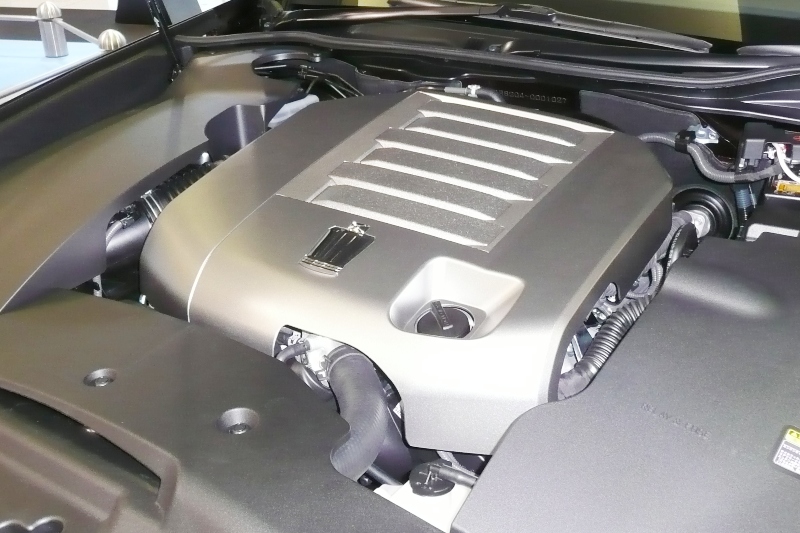
Initially, the 2011 Volvo S60 will come only with a six-cylinder engine. Known as the T6, this turbocharged 3.0-liter inline six-cylinder is the most potent engine Volvo has ever offered in the S60. It’s rated at 300 horsepower and 325 pound-feet of torque. A six-speed automatic transmission with sport and manual shift modes is standard, as is all-wheel drive. A front-wheel-drive model won’t be offered at launch, but Volvo will add one in early 2011, along with a second, more fuel-efficient engine option.
Step on the gas pedal and the 2011 Volvo S60 T6 AWD moves out briskly. Overtaking other cars on the freeway is effortless, and Volvo’s claimed 6.2-second 0-60-mph time should be right on target. The engine delivers its power in a smooth, aurally pleasing manner, and the six-speed automatic shifts smoothly, too. Fuel economy is average compared with other six-cylinder models in this class, with projected EPA mileage ratings of 17 city and 26 highway mpg.
Three different suspension programs are available on the 2011 S60 T6 AWD. The standard setup is called “Dynamic” and is meant to give the S60 a sporting character. Buyers wanting more compliance over potholed highways can opt for the less aggressive “Touring” setup for no extra charge. If you want the best of both worlds, there’s the optional Four-C adaptive suspension, which has driver-selectable “Comfort,” “Sport” and “Advanced” settings.
Our S60 T6 AWD test car had the Dynamic setup, along with standard 18-inch all-season tires (17s are also available). We wouldn’t call it a sport sedan, but handling is sure-footed and it’s easy to find a groove as you go from corner to corner. The steering has a nice weight to it (not too heavy) and feels precise as you enter cloverleaf freeway ramps.
2011-volvo-s60-center-stack.jpg

2005 Volvo S60 interior.JPG


2011 Volvo S60 Sedan Review

Posted by admin on March-29-2010 Add Comments

2011 Volvo S60 Sedan
Volvo S60 sedan is definitely an entry-level high class or a compact executive vehicle of Sweden cars. The 2011 Volvo S60 is different from anything the car maker has made previously, this new automobile comes with a stylish design, dynamic driving properties, innovative technologies and as you’d expect from Volvo ground breaking safety standards. The New S60 Volvo 2011 is more sculpted, with curvier headlights, broader shoulders, dramatic hood creases plus a more upscale look overall.
The newest Volvo S60 looks and drives like no other Volvo before and the automobile’s technology can allow you to to become more secure and more assured behind the wheel,” says Stephen Odell, president and CEO of Volvos cars. The 2011 Volvo S60 could be pre-loaded with pedestrian detection – a ground breaking safety feature that may detect people on the streets in front of the automobile and brake immediately in the event the driver doesn’t react soon enough.
Volvo S60 has been released with a range of exterior colors which include a couple of new tones: vibrant copper and electrum gold. This Volvo automobile is a rather beautiful vehicle in the metal. It is a refreshing departure from the geometric styling formula used by the S40 and S80. The main character line flows down the side of the S60 in a gentle wave, complementing the quick roof line.
s60 interior
Inside, the newest S60 strikes one as more functional as compared to luxurious in its atmosphere, but it’s difficult to find fault with its carefully considered ergonomics and orthopedically designed seats. The S60 interior is lavish when it comes to its driver-oriented details, but it’s still a 5-seater sedan giving comfy space for anyone its passengers. The sculpted outer rear seats give the passenger in the middle welcome side support. Knee space in the rear seat has increased by 30 mm compared with the prior model S60. The rear seat splits 40/60 and the boot opening has been made 107 mm wider than in the prior model S60. The sporty interior of the all-new S60 is also one of the most superior high-tech environment ever supplied to a Volvo driver.
Throughout its first year of production, the all-new Volvo S60 sedan is going to be offered with a number of diesel and gasoline engines spanning the range from an economical 85 kw drive model to a high-performance turbocharged T6 petrol engine producing 224 kw. These engines are all coupled to either a six-speed automatic or a six-speed manual transmission. 0-litre petrol engine has been improved primarily because of decrease internal friction. It now produces 224kw and 440 nm of torque. Acceleration from 0-100 km/h takes 6.5 seconds before hitting a top speed of 250 km/h. While producing more power, Volvo engineers have succeeded in slicing fuel consumption by about 10 p.c to 10.2 litres per 100km.
Just like all Volvos cars, the S60 includes a bunch of safety features. Volvo’s City Safety, which automatically applies the brakes to reduce the damage from or completely eliminate crashes under 18 mph, is standard. The latest pedestrian detection system can apply full braking power to reduce the force of a accident with a pedestrian at speeds up to 21 mph. Additionally, the newest S60 can be obtained with driver alert control, a blind spot warning system, lane departure warning, and several airbags.
vovlo s60 2011
Listed below are the autocar reviewers reports concerning the 2011 Volvo S60
Motor Authority – At first look, the brand new S60 features definite coupe-like proportions, accompanied by strong shoulders, which together give it a glance that’s much like the design of the Jaguar XF. There are, nevertheless, lots of distinctive components such as the standard Volvo grille and sculptured headlamps that can assist the vehicle battle it out in one of the industry toughest segments.

Anti-lock braking system

An anti-lock braking system, or ABS is a safety system which prevents the wheels on a motor vehicle from locking up (or ceasing to rotate) while braking.

A rotating road wheel allows the driver to maintain steering control under heavy braking by preventing a skid and allowing the wheel to continue interacting tractively with the road surface as directed by driver steering inputs. ABS offers improved vehicle control and decreases stopping distances on dry and especially slippery surfaces. However, on loose surfaces like gravel and snow-on-pavement, it can slightly increase braking distance while still improving vehicle control.[1] On others, it may not improve control at all.

Since initial widespread use in production cars, anti-lock braking systems have evolved considerably. Recent versions not only prevent wheel lock under braking, but also electronically control the front-to-rear brake bias. This function, depending on its specific capabilities and implementation, is known as electronic brakeforce distribution (EBD), traction control system, emergency brake assist, or electronic stability control.


Early Anti-lock Brake System

Anti-lock braking systems were first developed for aircraft use in 1929, by the French automobile and aircraft pioneer, Gabriel Voisin, asthreshold braking on airplanes is nearly impossible. An early system was Dunlop's Maxaret system, introduced in the 1950s and still in use on some aircraft models.[2] These systems used a flywheel and valve attached to the hydraulic line that fed the brake cylinders. The flywheel was attached to a drum that ran at the same speed as the wheel. In normal braking the drum and flywheel would spin at the same speed. If the wheel slowed suddenly the drum would do the same, leaving the flywheel spinning at a faster rate. This caused the valve to open, allowing a small amount of brake fluid to bypass the master cylinder into a local reservoir, lowering the pressure on the cylinder and releasing the brakes. The use of the drum and flywheel meant the valve only opened when the wheel was turning. In testing, a 30% improvement in braking performance was noted, because the pilots immediately applied full brakes instead of slowly increasing pressure in order to find the skid point. An additional benefit was the elimination of burned or burst tires.[3]

In 1958 a Royal Enfield Super Meteor motorcycle was used by the Road Research Laboratory to test the Maxaret anti-lock brake.[4] The experiments demonstrated that anti-lock brakes could be of great value on motorcycles, where skidding is involved in a high proportion of accidents. Stopping distances were reduced in almost all the tests compared with locked wheel braking, but particularly on slippery surfaces, where the improvement could be as much as 30 percent. Enfield's technical director at the time, Tony Wilson-Jones, saw little future in the system, however, and it was not put into production by the company.[4]

A fully mechanical system saw limited automobile use in the 1960s in the Ferguson P99 racing car, the Jensen FF and the experimental all wheel drive Ford Zodiac, but saw no further use; the system proved expensive and, in automobile use, somewhat unreliable.


Modern Anti-lock Brake System

Chrysler, together with the Bendix Corporation, introduced a true computerized three-channel, four sensor all-wheel antilock brake system called "Sure Brake" on the 1971 Imperial.[5] It was available for several years thereafter, functioned as intended, and proved reliable. General Motors introduced the "Trackmaster" rear-wheel (only) ABS as an option on their Rear-wheel drive Cadillac models in 1971.[6][7] In 1971Nissan offered EAL(Electro Anti-lock System) as an option on the Nissan President, this became Japan's first electronic ABS(Anti-lock braking system).[8]

In 1975, Robert Bosch took over a European company called Teldix (contraction of Telefunken and Bendix) and all patents registered by this joint-venture and used this acquisition to build the base of the ABS system introduced on the market some years later. The German firmsBosch and Daimler-Benz had been co-developing anti-lock braking technology since the early 1970s, and introduced the first completely electronic 4-wheel multi-channel ABS system in trucks and the Mercedes-Benz S-Class in 1978.[citation needed]

The modern ABS system applies individual brake pressure to all four wheels through a control system of hub mounted sensors and a dedicated micro-controller. ABS is offered, or comes standard, on most road vehicles produced today and is the foundation for ESC systems, which are also rapidly increasing in popularity due to the vast reduction in price of vehicle electronics over the years.


Generic Cutaway Car Steering & Suspension System
Generic Cutaway Car


Anti-lock brake systems are designed to minimize and control wheel lock up during braking. Wheel lock, also known as wheel slippage, can have a dramatic affect on the control of the vehicle during braking. Wheels that are locked up, with the tires sliding across the road surface, cannot be controlled by the vehicle operator. The driver is just along for the ride until wheel slippage is reduced to a point where vehicle control is regained. Braking performance is also affected by wheel slippage. The effectiveness of the automotive braking system depends on the ability of the tires to grip the road surface. When the wheels are locked up during braking, the friction for braking is generated by the tires sliding on the pavement, not between the brake pads and the rotor surface. The heat generated during such an event is dissipated very poorly by the tires. The brake linings and the rotor or drum surfaces are much better suited to dissipate the heat generated by friction. Rolling tires with good road surface adhesion when coupled with an efficient brake system, will provide the best stopping performance for a vehicle. The ABS system is able to monitor the slippage of the individual wheels during stops and control the braking of any or all wheels that may lock up. The control module determines wheel slippage by monitoring wheel speed sensor information while braking. A wheel that is exhibiting noticeably slower speeds than the other wheels, would be considered locked up and be selected for brake lock up control. Wheel lock up control is accomplished by modulation of the brake pressure, to the affected wheel or wheels.

ABS CONTROL MODULE

The ABS control module is a microprocessor that is used to manage the operation of the ABS system. The ABS control module monitors and processes information from various sensors, modulates pressure to the brake system and carries out self-diagnostic tasks. Some of the inputs to the ABS module are the wheel speed sensors, brake switch, brake warning light, parking brake switch, pressure modulation devices and ignition and power feeds. The output controls consist of brake pressure modulation components and the anti-lock brake lamp. Most ABS control modules have the ability to run self diagnostic tasks and store trouble codes for failed diagnostics. The ABS control module can display this information to a scan tool or through flash codes, via the dash mounted anti-lock brake light, making troubleshooting and repair more accessible. Some ABS control modules store sensor information when a failed diagnostic is recorded. This can assist automotive technicians in diagnosing ABS trouble codes by displaying a record of sensor information at the time of the failed diagnostic.

WHEEL SPEED SENSORS

Wheel speed sensors are used by the ABS control module to monitor wheel lock up. Wheel speed sensors consist of a toothed wheel, mounted on the wheel hub or axle shaft, so as to rotate when the wheel is in motion. A magnetic sensor is placed at a fixed location, a calibrated distance from the toothed wheel. The air gap between the toothed wheel and the magnetic sensor is usually around .040 to .060 in (refer to your auto repair book for the exact spec). When the tooth wheel rotates past the magnet on the sensor, an AC voltage is produced. The AC voltage output of the wheel speed sensor increases as the wheel speed increases. The ABS control module monitors this voltage to calculate wheel speed for ABS operation. If the ABS control module senses lower voltage from one sensor during braking, it will translate that as slower speed at that wheel and modulate brake pressure to control brake lock up.

HYDRAULIC MODULATOR

Brake lock up control is accomplished by rapidly applying and releasing the brakes of the affected wheel. To achieve this, the ABS control module is able to modulate brake hydraulic pressure to individual wheels. Brake pressure modulation is attained through several different methods. Design of the pressure modulation system varies according to vehicle design. One type of brake pressure modulator system uses solenoid operated valves to control brake pressure to individual wheels. The solenoids and valve arrangements are able to increase, hold or release brake hydraulic pressure to the brake system of a wheel. This system incorporates a hydraulic fluid pump to return fluid to the master cylinder and an accumulator to store excess brake fluid. When ABS operation is demanded, the control module operates the solenoid valves to hold or release pressure to one or all of the wheels, to control wheel lock up. A more recent design (and simpler to troubleshoot) uses high speed electric motors to seat and unseat hydraulic valves to control brake pressure during ABS stops. The electric motors are able to cycle the pressure modulation valves many times per second, to control wheel lock up. This design is less expensive to produce, since it does not require a hydraulic pump and accumulator as opposed to earlier designs.

ABS WARNING LIGHT

The ABS warning light operation is managed by the ABS control module. It is located in or near the instrument cluster and is used to warn the vehicle operator of a malfunction in the ABS system. In the event of a failure in the ABS system, the ABS warning lamp is illuminated to warn the driver. Some systems will inhibit ABS operation when the ABS lamp is illuminated. Refer to a manufacturer's manual covering your particular year/make/model automobile for the diagnostic and troubleshooting details before embarking on an auto repair project involving the ABS system.


VVT-i Engine


VVT-i, or Variable Valve Timing with intelligence:-
                                                                                                                                       is an automobile variable valve timingtechnology developed by Toyota, similar in performance to the BMW's VANOS. The Toyota VVT-i system replaces the Toyota VVT offered starting in 1991 on the 5-valve per cylinder 4A-GE engine. The VVT system is a 2-stage hydraulically controlled cam phasing system.

VVT-i, introduced in 1996, varies the timing of the intake valves by adjusting the relationship between the camshaft drive (belt, scissor-gear or chain) and intake camshaft. Engine oil pressure is applied to an actuator to adjust the camshaft position. Adjustments in the overlap time between the exhaust valve closing and intake valve opening result in improved engine efficiency. Variants of the system, including  Dual VVT-i.


File:Toyota 1ZZ-FE engine.jpg
Variable valve timing allows the relationship between the separate inlet and exhaust camshafts to vary the valve timing overlap. In doing so it overcomes the side effects described above by using a computer to continuously vary the intake valve timing and overlap. The valve timing and overlap are adjusted through a series of simple mechanisms to ensure the optimum conditions apply across all the working rev range. The advantages are lower fuel consumption, lower exhaust emissions and higher power output. Because the system is continuously variable, an ‘i’ for ‘intelligent’ has been added to the acronym.
how vvti engine works


Dual VVT-i :-
                                   in 1998, Dual VVT-i which adjusts timing on both intake and exhaust camshafts was first introduced on the RS200 Altezza's 3S-GE engine.

Dual VVT-i is also found in Toyota's new generation V6 engine, the 3.5-liter 2GR-FE first appearing on the 2005 Avalon. This engine can now be found on numerous Toyota and Lexus models. By adjusting the valve timing, engine start and stop occurs almost unnoticeably at minimum compression. In addition fast heating of the catalytic converter to its light-off temperature is possible thereby reducing hydrocarbon emissions considerably.

Toyota's UR engine V8 also uses this technology. Dual VVT-i was later introduced to Toyota's latest small 4-cylinder ZR engines found in compact vehicles such as the new Toyota Corolla and Scion xD and in larger 4-cylinder AR engines found in the Camry and RAV4.


In 1998, “Dual” VVT-i (adjusts both intake and exhaust camshafts) was first introduced in the RS200 Altezza’s 3S-GE engine. Dual VVT-i is also found in Toyota’s new generation V6 engine, the 3.5L 2GR-FE V6. This engine can be found in the Avalon, RAV4, and Camry in the US, the Aurion in Australia, and various models in Japan, including the Estima. Dual VVT-i is also used in the Toyota Corolla (1.6 dual VVT-i 124bhp).
Other Dual VVT-i engines include the 1.8L 2ZR-FE I4, used in Toyota’s next generation of compact vehicles such as the Scion XD. It is also used in the 2JZ-GE and 2JZ-GTE engines used in the Lexus IS300 and in the Toyota Supra. By adjusting the valve timing engine start and stop occurs virtually unnoticeably at minimum compression. In addition fast heating of the catalytic converter to its light-off temperature is possible thereby reducing hydrocarbon emissions considerably.


File:2GR-FSE.jpg


ENGINE

An engine (or motor) is a machine designed to convert energy into useful mechanical motion.

Engines come in many types, a common type is a heat engine such as an internal combustion engine which typically burns a fuel with air and uses the hot gases for generating power. External combustion engines such as steam engines use heat to generate motion via a separate working fluid.

Terminology

Originally an engine was a mechanical device that converted force into motion. Military devices such as catapults, trebuchets and battering rams are referred to as siege engines. The term "gin" as in cotton gin is recognised as a short form of the Old French word engin, in turn from the Latin ingenium, related to ingenious. Most devices used in the industrial revolution were referred to as engines, and this is where thesteam engine gained its name.[citation needed]

In modern usage, the term is used to describe devices capable of performing mechanical work, as in the original steam engine. In most cases the work is produced by exerting a torque or linear force, which is used to operate other machinery which can generate electricity,pump water, or compress gas. In the context of propulsion systems, an air-breathing engine is one that uses atmospheric air to oxidise thefuel carried rather than supplying an independent oxidizer, as in a rocket.

In common usage, an engine burns or otherwise consumes fuel, and is differentiated from an electric machine (i.e., electric motor) that derives power without changing the composition of matter. A heat engine may also serve as a prime mover, a component that transforms the flow or changes in pressure of a fluid into mechanical energy. An automobile powered by an internal combustion engine may make use of various motors and pumps, but ultimately all such devices derive their power from the engine.

The term motor was originally used to distinguish the new internal combustion engine-powered vehicles from earlier vehicles powered bysteam engines, such as the steam roller and motor roller, but may be used to refer to any engine.

History Of Engine

(1)  Antiquity :-
                                    Simple machines, such as the club and oar (examples of the lever), are prehistoric. More complex engines using human power, animal power, water power, wind power and even steam power date back to antiquity. Human power was focused by the use of simple engines, such as the capstan, windlass or treadmill, and with ropes, pulleys, and block and tackle arrangements; this power was transmitted usually with the forces multiplied and the speed reduced. These were used in cranes and aboard ships in Ancient Greece, as well as in mines, water pumps and siege engines in Ancient Rome. The writers of those times, including Vitruvius, Frontinus and Pliny the Elder, treat these engines as commonplace, so their invention may be far more ancient. By the 1st century AD, various breeds of cattle and horses were used in mills, driving machines similar to those powered by humans in earlier times.

According to Strabo, a water powered mill was built in Kaberia of the kingdom of Mithridates during the 1st century BC. Use of water wheelsin mills spread throughout the Roman Empire over the next few centuries. Some were quite complex, with aqueducts, dams, and sluices to maintain and channel the water, along with systems of gears, or toothed-wheels made of wood and metal to regulate the speed of rotation. In a poem by Ausonius in the 4th century, he mentions a stone-cutting saw powered by water. Hero of Alexandria is credited with many suchwind and steam powered machines in the 1st century AD, including the Aeolipile, but it is not known if any of these were put to practical use.

(2)  Medieval :-
                                    During the Muslim Agricultural Revolution from the 9th to 13th centuries, Muslim engineers developed numerous innovative industrial uses ofhydropower, early industrial uses of tidal power, wind power, and fossil fuels such as petroleum, together with the earliest large factorycomplexes (tiraz in Arabic). The industrial uses of watermills in the Islamic world date back to the 7th century, whereas horizontal-wheeledand vertical-wheeled water mills were both in widespread use since at least the 9th century. A variety of industrial mills were invented in the Islamic world, including fulling mills, hullers, steel mills, sugar refineries, and windmills. By the 11th century, every province throughout the Islamic world had these industrial mills in operation, from the Middle East and Central Asia to al-Andalus and North Africa.

Roman engineers invented water turbines in the 4th century AD, Muslim engineers employed gears in mills and water-raising machines, and pioneered the use of dams as a source of water power to provide additional power to watermills and water-raising machines. Such advances made it possible for many industrial tasks that were previously driven by manual labour to be mechanized and driven by machinery to some extent in the medieval Islamic world.

In 1206, al-Jazari employed a crank-connecting rod system for two of his water-raising machines. A similar steam turbine later appeared in Europe a century later, which eventually led to the steam engine and Industrial Revolution in 18th century Europe.

 (3)  Industrial revolution :-
                                                                   English inventor Sir Samuel Morland allegedly used gunpowder to drive water pumps in the 17th century. For more conventional, reciprocatinginternal combustion engines, the fundamental theory for two-stroke engines was established by Sadi Carnot, France, 1824, whilst the American Samuel Morey received a patent on April 1, 1826. Sir Dugald Clark (1854–1932) designed the first two-stroke engine in 1878 and patented it in England in 1881. Automotive production has used a range of energy-conversion systems. These include electric, steam, solar,turbine, rotary, and piston-type internal combustion engines.

Karl Benz was one of the leaders in the development of new engines. In 1878 he began to work on new designs. He concentrated his efforts on creating a reliable gas two-stroke engine that was more powerful, based on Nikolaus Otto's design of the four-stroke engine. Karl Benz showed his real genius, however, through his successive inventions registered while designing what would become the production standard for his two-stroke engine. Benz was granted a patent for it in 1879.

The lightweight petrol internal combustion engine, operating on a four-stroke Otto cycle, has been the most successful for automobiles, while the more efficient diesel engine is used for trucks and buses
.

(4) Horizontally opposed pistons :-


                                                                                                      In 1896, Karl Benz was granted a patent for his design of the first engine with horizontally opposed pistons. Many BMW motorcycles use this engine type. His design created an engine in which the corresponding pistons move in horizontal cylinders and reach top dead center simultaneously, thus automatically balancing each other with respect to their individual momentums. Engines of this design are often referred to as flat engines because of their shape and lower profile. They must have an even number of cylinders and six, four or two cylinder flat engines have all been common. The most well-known engine of this type is probably the Volkswagen Beetle engine. Engines of this type continue to be a common design principle for high performance aero engines (for propellor driven aircraft) and, engines used by automobile producers such as Porsche and Subaru.
(5) Advancement :-
                                                        Continuance of the use of the internal combustion engine for automobiles is partly due to the improvement of engine control systems (onboard computers providing engine management processes, and electronically controlled fuel injection). Forced air induction by turbocharging and supercharging have increased power outputs and engine efficiencies. Similar changes have been applied to smaller diesel engines giving them almost the same power characteristics as petrol engines. This is especially evident with the popularity of smaller diesel engine propelled cars in Europe. Larger diesel engines are still often used in trucks and heavy machinery. They do not burn as clean as gasoline engines, however they have far more torque. The internal combustion engine was originally selected for the automobile due to its flexibility over a wide range of speeds. Also, the power developed for a given weight engine was reasonable; it could be produced by economical mass-production methods; and it used a readily available, moderately priced fuel - petrol.
(6) Increasing power :-
                                                                   The first half of the twentieth century saw a trend to increasing engine power, particularly in the American models. Design changes incorporated all known methods of raising engine capacity, including increasing the pressure in the cylinders to improve efficiency, increasing the size of the engine, and increasing the speed at which power is generated. The higher forces and pressures created by these changes created engine vibration and size problems that led to stiffer, more compact engines with V and opposed cylinder layouts replacing longer straight-line arrangements.

(7) Combustion efficiency :-
                                                                                 The design principles favoured in Europe, because of economic and other restraints such as smaller and twistier roads, leant toward smaller cars and corresponding to the design principles that concentrated on increasing the combustion efficiency of smaller engines. This produced more economical engines with earlier four-cylinder designs rated at 40 horsepower (30 kW) and six-cylinder designs rated as low as 80 horsepower (60 kW), compared with the large volume V-8 American engines with power ratings in the range from 250 to 350 hp (190 to 260 kW).[citation needed]


(8) Engine configuration :-
                                                                              Earlier automobile engine development produced a much larger range of engines than is in common use today. Engines have ranged from 1 to 16 cylinder designs with corresponding differences in overall size, weight, piston displacement, and cylinder bores. Four cylinders and power ratings from 19 to 120 hp (14 to 90 kW) were followed in a majority of the models. Several three-cylinder, two-stroke-cycle models were built while most engines had straight or in-line cylinders. There were several V-type models and horizontally opposed two- and four-cylinder makes too. Overhead camshafts were frequently employed. The smaller engines were commonly air-cooled and located at the rear of the vehicle; compression ratios were relatively low. The 1970s and '80s saw an increased interest in improved fuel economy which brought in a return to smaller V-6 and four-cylinder layouts, with as many as five valves per cylinder to improve efficiency. The Bugatti Veyron 16.4 operates with a W16 engine meaning that two V8 cylinder layouts are positioned next to each other to create the W shape.

The largest internal combustion engine ever built is the Wärtsilä-Sulzer RTA96-C, a 14-cylinder, 2-stroke turbocharged diesel engine that was designed to power the Emma Maersk, the largest container ship in the world. This engine weighs 2300 tons, and when running at 102 RPM produces 109,000 bhp (80,080 kW) consuming some 13.7 tons of fuel each hour.